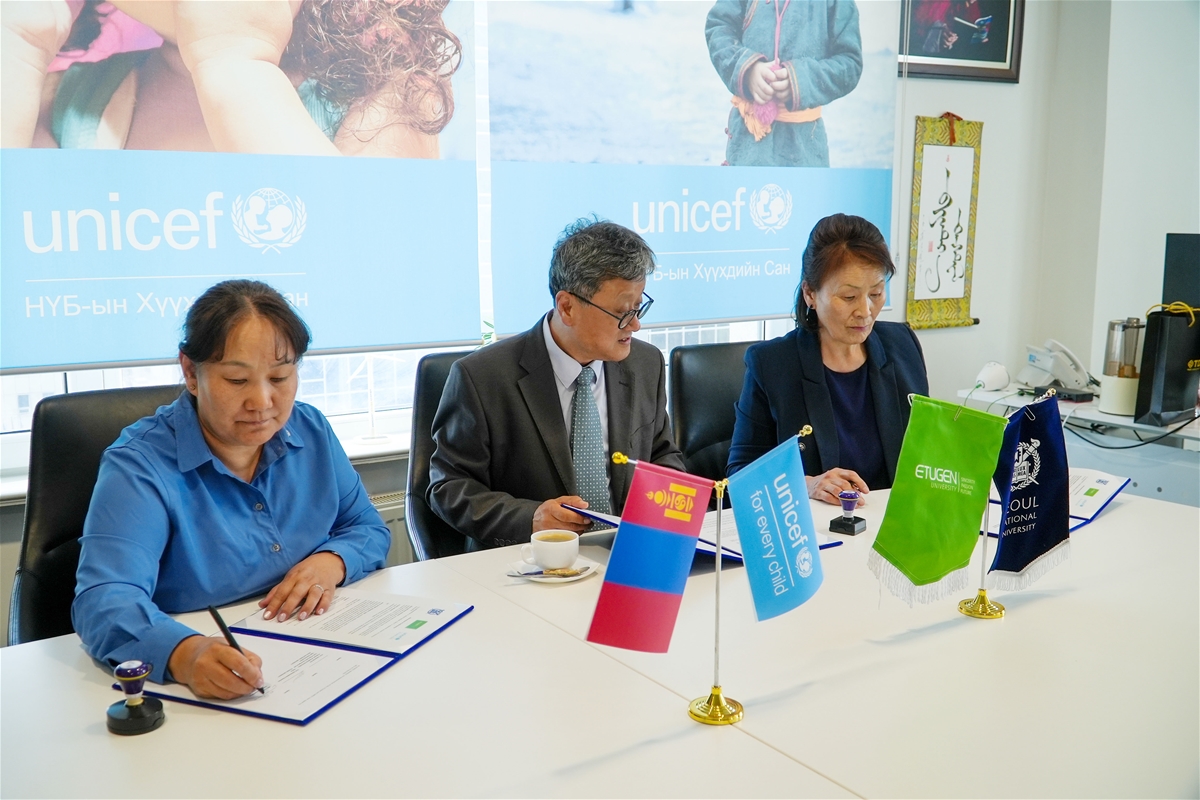
On May 20, 2026, a tripartite Memorandum of Understanding (MOU) was signed at the UNICEF Mongolia Country Office. This agreement establishes a collaborative framework between Etugen University’s "Digital Health Center," Seoul National University (SNU) of the Republic of Korea, and the United Nations Children's Fund (UNICEF) to advance initiatives in the fields of digital health and artificial intelligence (AI).
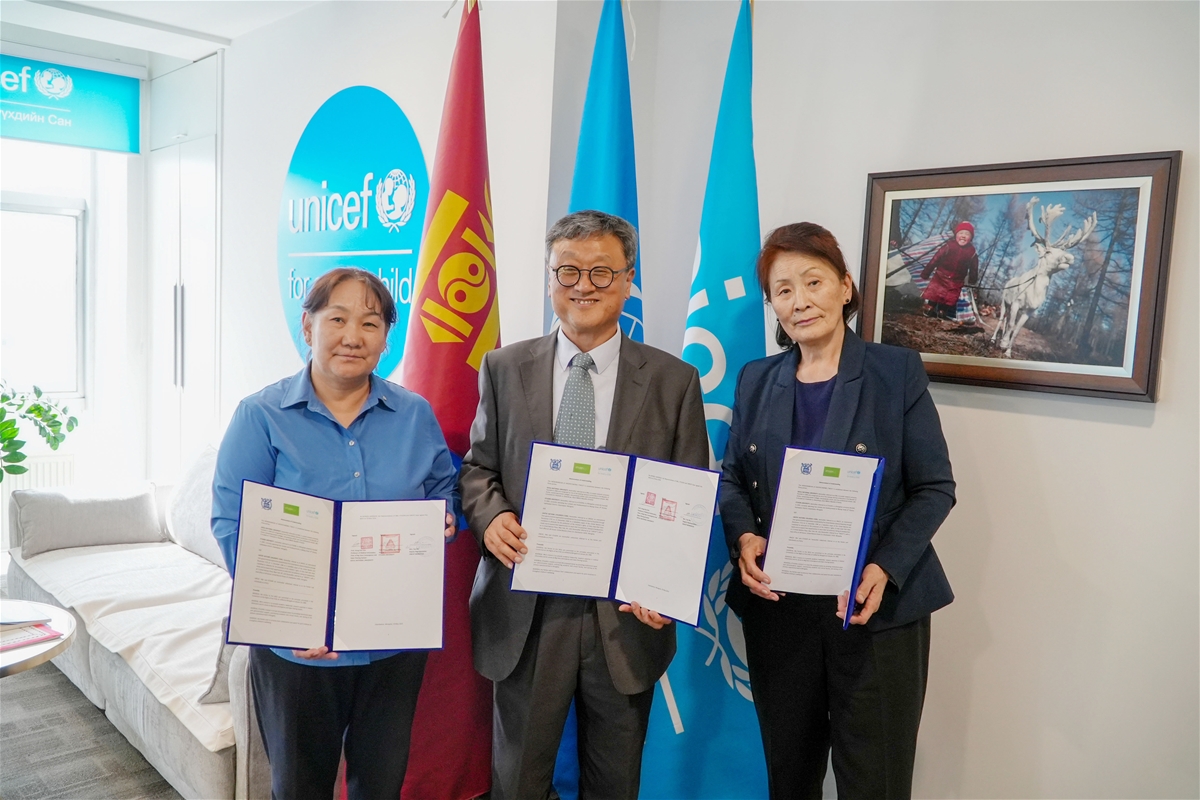
The Memorandum of Understanding was officially signed and executed by Prof. Hong-Gee Kim, representing Seoul National University; Dr. Prof. B. Batsereedene, Rector of Etugen University; and D. Amaraa, representing Yan Mu, Deputy Representative of the UNICEF Mongolia Country Office, thereby formally validating the strategic partnership.
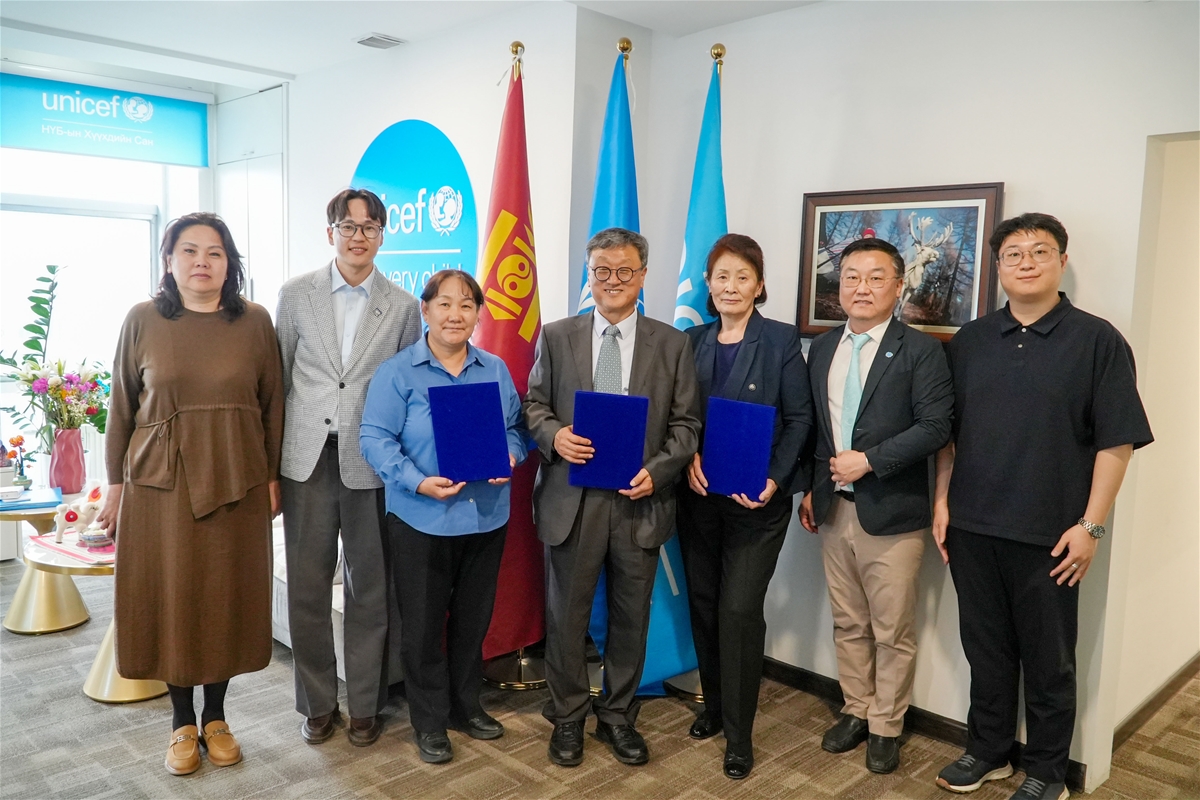
The signing ceremony was attended by B. Bayarbaatar, Director of the Digital Health Center at Etugen University, a 2015 Etugen alumnus, and a Digital Health Scientist at Samsung Medical Center in South Korea; Ch. Bataa, Senior Health Specialist at UNICEF; Associate Prof. Ts. Munguntsetseg, Vice President for Academic Affairs at Etugen University; and other organizational representatives.
This collaborative initiative is planned to be implemented based at the "Center for Digital Health," jointly established by Etugen University and Seoul National University. To improve healthcare outcomes and the quality of medical services in Mongolia, the center will focus on advancing research, training, and innovation in the fields of digital health, medical artificial intelligence, and health data science.
The parties agreed to execute their cooperation based on the principles of upholding children's rights, implementing the 2030 Sustainable Development Goals (SDGs), enhancing the quality and accessibility of social services, and promoting the health and well-being of women and children.
Within the framework of the Memorandum of Understanding, the parties will cooperate across multiple areas. This includes implementing joint research and pilot projects in digital health, health informatics, and artificial intelligence, as well as organizing training programs, seminars, and workshops. Furthermore, the collaboration will focus on developing open-source healthcare technologies, hosting academic conferences and policy dialogues, securing research funding, and facilitating faculty and researcher exchange programs.
This collaboration is of paramount importance for strengthening the digital health ecosystem in Mongolia, enhancing human resource capacity in the healthcare sector, and contributing significantly to the integration of modern technological advancements and artificial intelligence solutions.